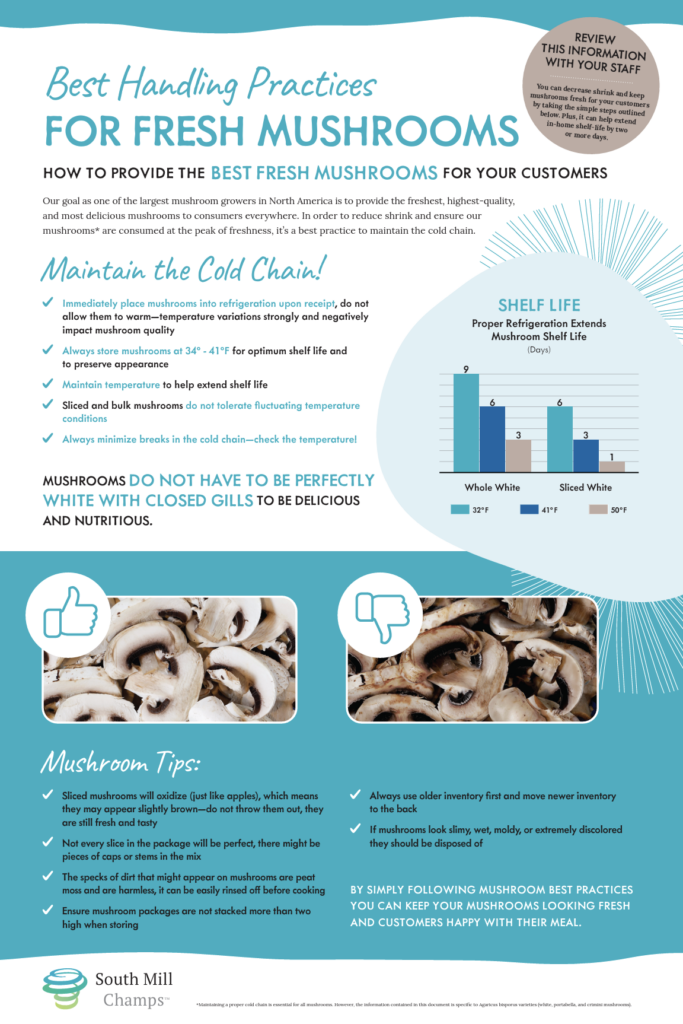
In the produce perimeter, mushrooms are a high-value category that requires a specialized touch. Because they are approximately 90% water and continue to breathe after harvest, they are exceptionally sensitive to their surroundings. Poor handling doesn’t just impact their appearance, it can lead to “shrink” (profit loss that occurs long before a product’s sell-by date).
At South Mill Champs, we combine vertical integration with advanced logistics to deliver peak freshness to your dock. To ensure that quality holds all the way to the consumer’s basket, we’ve outlined the “Gold Standard” for mushroom handling.
Temperature Control
Temperature is the single most important factor in keeping mushrooms fresh. Storing mushrooms within the 34°F – 41°F (1°C – 5°C) range is essential for an optimum shelf life and to preserve their fresh appearance.
When temperatures rise above this window, the mushroom’s respiration rate accelerates. This leads to the veils opening and the texture softening. They can also deteriorate faster when not refrigerated, so placing them on unrefrigerated end-caps or quick-sale carts is not advised. Maintaining a strict cold chain from the receiving dock to the backroom cooler is the first line of defense against category loss.
Strategic Action
Conduct twice-daily temperature audits of both your backroom storage coolers and your retail display cases to ensure they remain consistently within the 34°F – 41°F window.
Merchandising for Airflow and Respiration
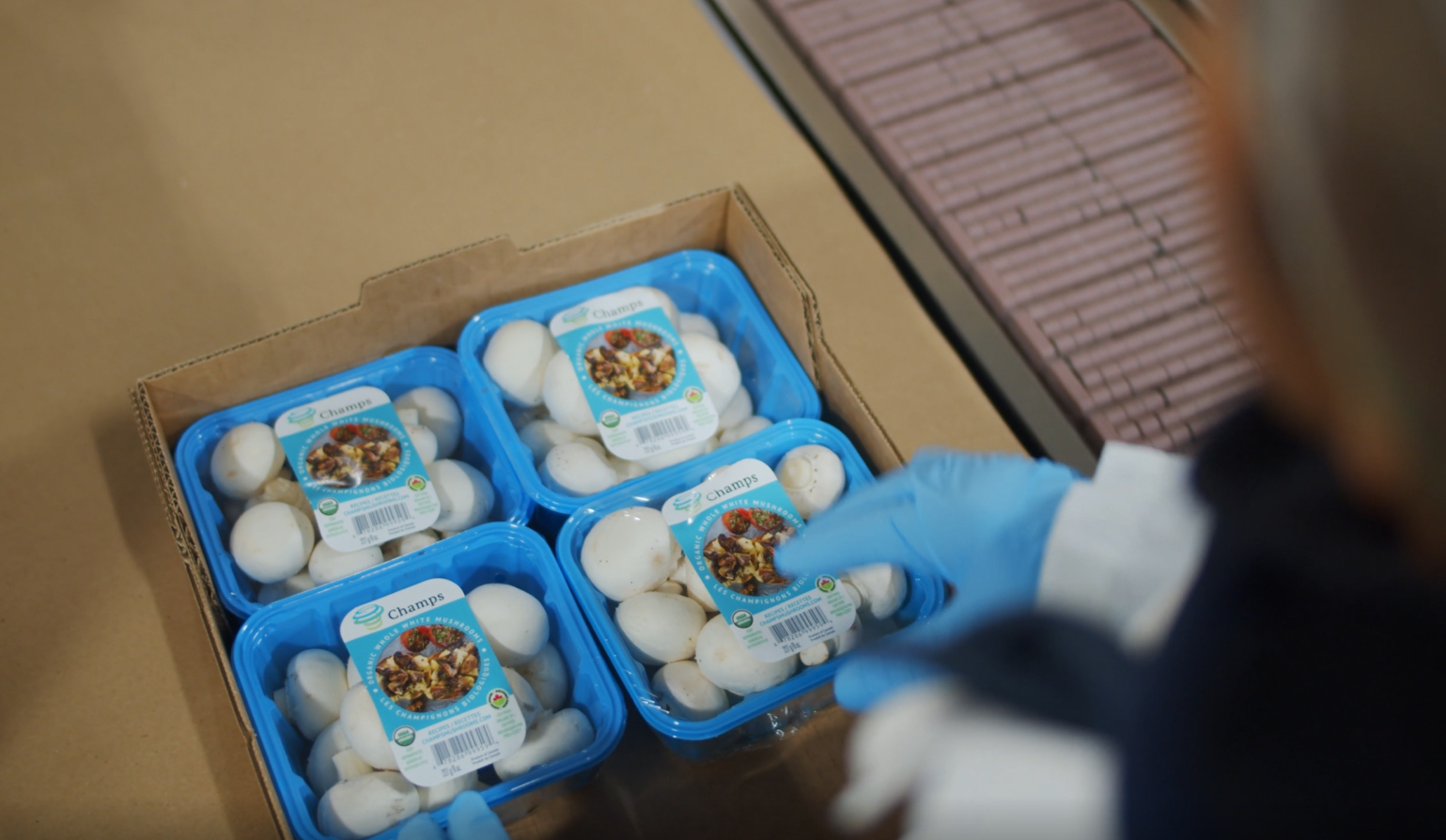
Mushrooms need room to breathe. Overstacking or tightly packing a display traps heat and restricts respiration, creating a microclimate that promotes spoilage.
To maintain freshness, mushrooms should be kept in their original shipping containers until they are ready to be placed on the shelf. When stocking the display, never stack more than two units high. This ensures proper air circulation around each package, preventing the heat buildup that leads to browning.
Strategic Action
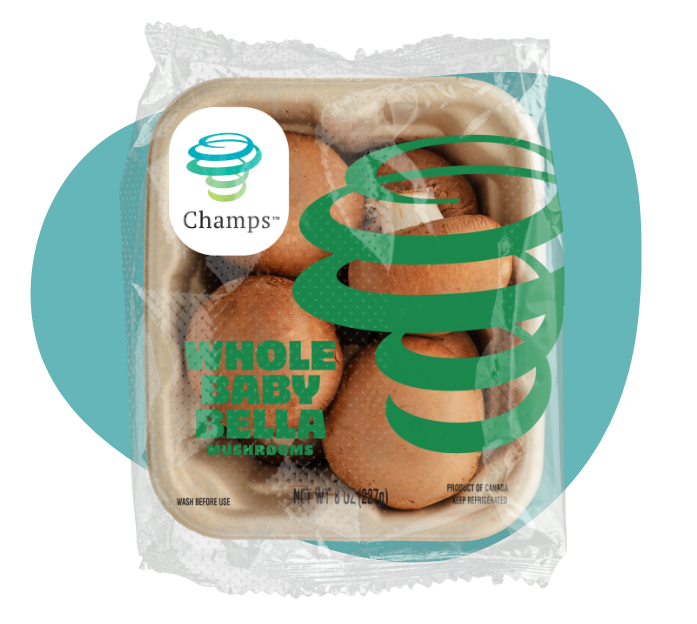
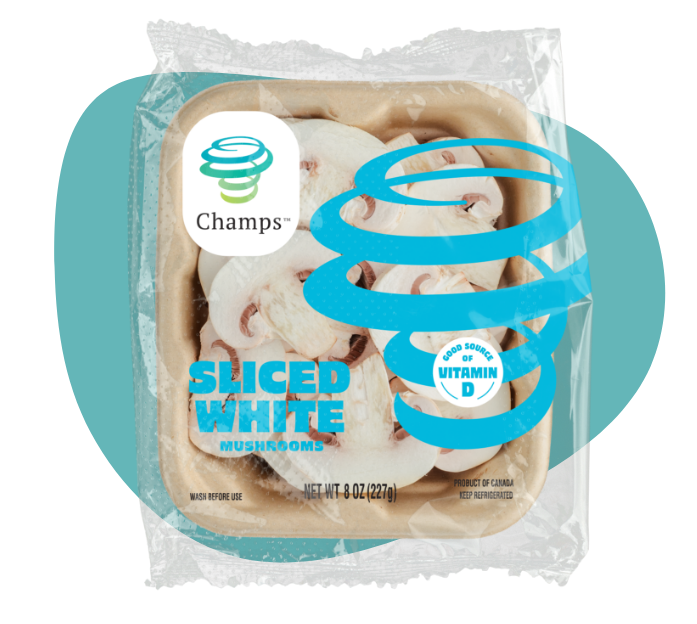
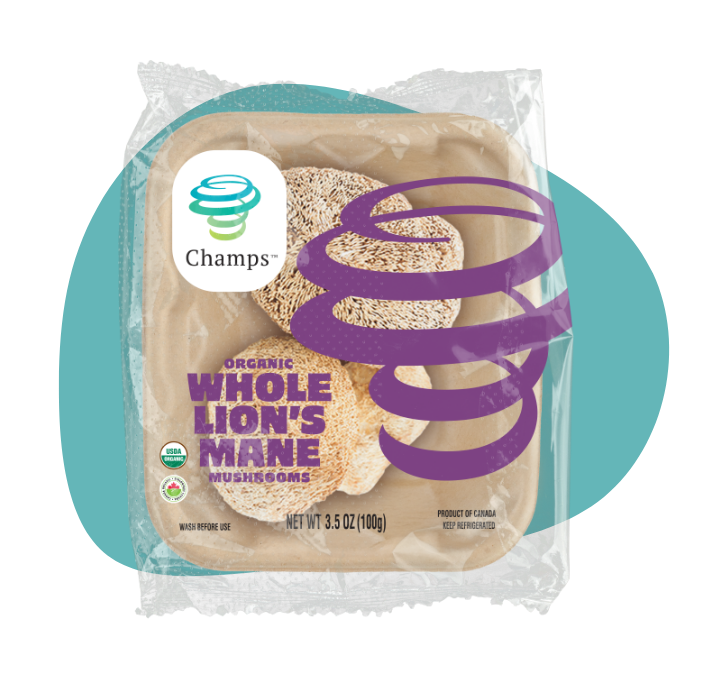
To further optimize your merchandising process, South Mill Champs offers new bamboo flow-wrapped tills. This packaging features perforated BOPP film that allows for natural evaporation, helping to maintain quality and prevent the condensation that causes slimy and brown mushrooms.
Keep Them Dry
Moisture is a mushroom’s primary enemy! Do not mist fresh mushrooms.
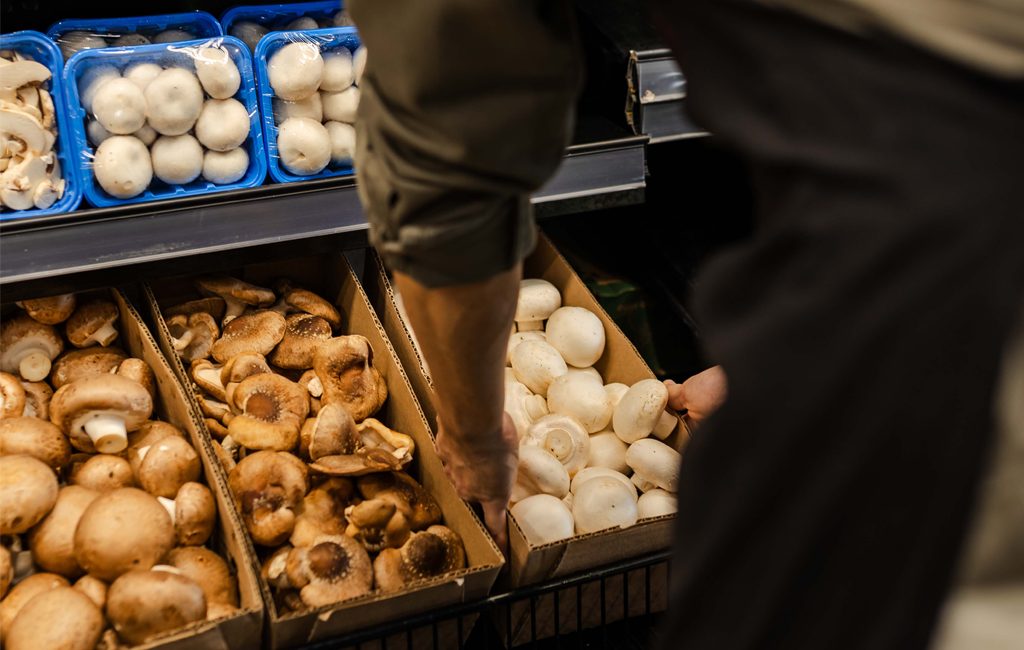
Direct contact with water or high-humidity misters leads to rapid browning, a slimy surface texture, and accelerated decay. Mushrooms are highly porous and can act like a sponge, absorbing water and any nearby strong odors from items like onions, leeks, or garlic.
Strategic Action
Designate a “No-Mist Zone” on your refrigerated rack. Ensure mushrooms are placed away from automated misters and from pungent aromatics to prevent flavor contamination.
Training and Visual Cues
Shrink reduction is an operational habit, not a one-time fix. Ensuring your produce associates are trained to recognize early signs of distress (such as slight veil opening or minor bruising) allows for proactive management, such as “Reduced for Quick Sale” programs, rather than total loss.
To support your team, we recommend keeping visual guides in high-traffic prep areas. Our Best Handling Practices Backroom Poster serves as a constant reminder of the “No-Mist” rule, proper stacking heights, and the importance of the 34°F – 41°F temperature standard.